Peak Season FOMO Is Costing You More Than You Think
There's a particular kind of travel anxiety that's become almost universal in recent years. It goes something like this: You scroll through your feed, see someone's photos from Sedona or the Outer Banks or a charming cabin in the Smokies, and suddenly you feel like you're already behind. Like everyone else has figured out something you haven't. Like if you don't book right now, you'll miss your chance.
That feeling has a name — FOMO — and the travel industry has gotten very, very good at feeding it.
The result? Millions of Americans every year book vacations at the worst possible time, in the most crowded possible places, paying prices that would make their past selves wince. And a lot of them come home exhausted, a little resentful, and wondering why the trip didn't feel as good as it looked on paper.
Let's talk about what's actually happening here, and how to stop falling for it.
The Numbers Behind the Markup
Peak travel demand isn't just inconvenient — it's expensive in ways that compound fast. During peak summer weeks, vacation rental prices in popular US destinations routinely run 40 to 80 percent higher than the same properties would cost in shoulder season. In some hotspot markets — think coastal Maine, Hilton Head, or Lake Tahoe — the gap is even wider.
And it's not just the nightly rate. When demand spikes, so do cleaning fees, minimum stay requirements, and the general scarcity that pushes travelers toward second or third-choice options at first-choice prices. You end up paying premium rates for a place you wouldn't have booked if better options hadn't already been snapped up.
Flight prices follow the same pattern. A round-trip from Chicago to Denver during Fourth of July week can cost two to three times what the same route runs in October. Multiply that across a family of four, add a week of peak-priced lodging, and you've burned through a budget that could have funded two separate trips at a different time of year.
Why We Do It Anyway
The psychology here is pretty well-documented. After any period of restriction or stress — and most Americans have had plenty of both in recent years — there's a strong pull toward what researchers sometimes call "compensatory consumption." You feel like you've missed out, so you want to overcorrect. Go bigger. Go now. Go somewhere impressive enough to justify the wait.
Travel marketers know this. The "limited availability" banners, the countdown timers, the emails telling you that three other people are looking at this rental right now — these aren't accidents. They're designed to trigger urgency and short-circuit the part of your brain that would otherwise pause and ask whether this is actually the best decision.
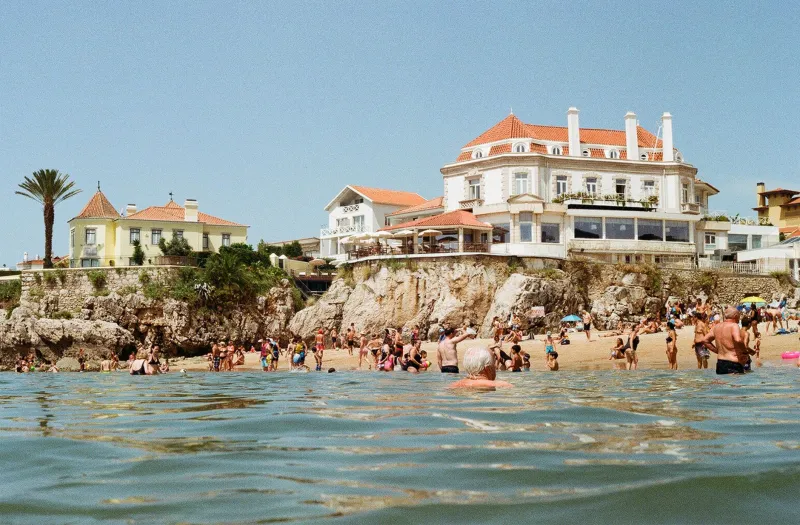
The cruel irony is that peak-season travel often delivers the least satisfying version of the experience you're chasing. That charming beach town you've been dreaming about? In July, it's gridlocked. The restaurant with the great reviews has a two-hour wait. The rental that looked peaceful in the photos is flanked by six other rentals full of people who had the exact same idea you did.
Manufactured Urgency vs. Genuine Opportunity
Not all time-sensitive travel decisions are FOMO traps. Sometimes there genuinely is a limited window — a specific event, a seasonal phenomenon, a once-in-a-while family gathering. The trick is learning to tell the difference between a real reason to book now and a manufactured one.
Ask yourself a few honest questions before you hit confirm:
Is the timing actually non-negotiable? If the answer is "because that's when everyone else goes" or "because it feels like I should," that's manufactured urgency. If the answer is "because my kid's school schedule only allows this window" or "because I need to be there for a specific event," that's real.
What am I actually trying to experience? A lot of peak-season bookings are driven by a destination's reputation rather than a clear vision of what you want to do there. If your dream is to feel the sun and swim in warm water, you have dozens of options across different price points and time windows. If your dream is specifically to be in Myrtle Beach in August with 300,000 other people, then okay — but own that choice.
What's the actual cost of waiting? Sometimes waiting means a better trip at a lower price. Sometimes it means missing something you'll genuinely regret. Knowing which situation you're in requires a moment of honest reflection, not a snap decision made while your thumb hovers over the booking button.
The Alternatives That Actually Deliver
Here's something the peak-season marketing machine doesn't want you to think about too hard: most of what makes a destination great doesn't disappear when the crowds thin out.
The Blue Ridge Parkway in October is arguably more beautiful than it is in July — and far less congested. The Texas Hill Country in March offers wildflower season, mild temperatures, and accommodation rates that haven't yet climbed to summer heights. New England in September still has warm enough water for swimming and none of the August chaos. The Pacific Coast Highway in November is dramatic and moody and about half the price.
And for travelers willing to look a little sideways? The town 45 minutes from the famous destination often offers a nearly identical experience — same regional character, same natural beauty, same food culture — without the infrastructure strain that comes with being on everyone's must-visit list.
At HiBnB, we see this play out in our search data all the time. Travelers who broaden their search radius by even 20 or 30 miles often find comparable or better rentals at significantly lower prices, in places where the host actually has bandwidth to make the stay feel special.
Building a Framework That Works for You
The goal isn't to never travel during peak season. Sometimes that's genuinely the right call, and there's nothing wrong with wanting to experience a place at its liveliest. The goal is to make that choice deliberately rather than reactively.
Before your next booking, try this: Give yourself 48 hours after you first feel the urge to book. In that window, look at what the same experience would cost two weeks earlier or later, in a slightly less obvious location, or in a different season entirely. Then decide.
Most of the time, you'll find that your options are better than you thought. Occasionally, you'll confirm that the peak-season booking really is the right move — and you'll feel better about making it.
Either way, you'll be making a choice instead of reacting to one. And that, more than any particular destination or time of year, is what tends to make for a genuinely good trip.